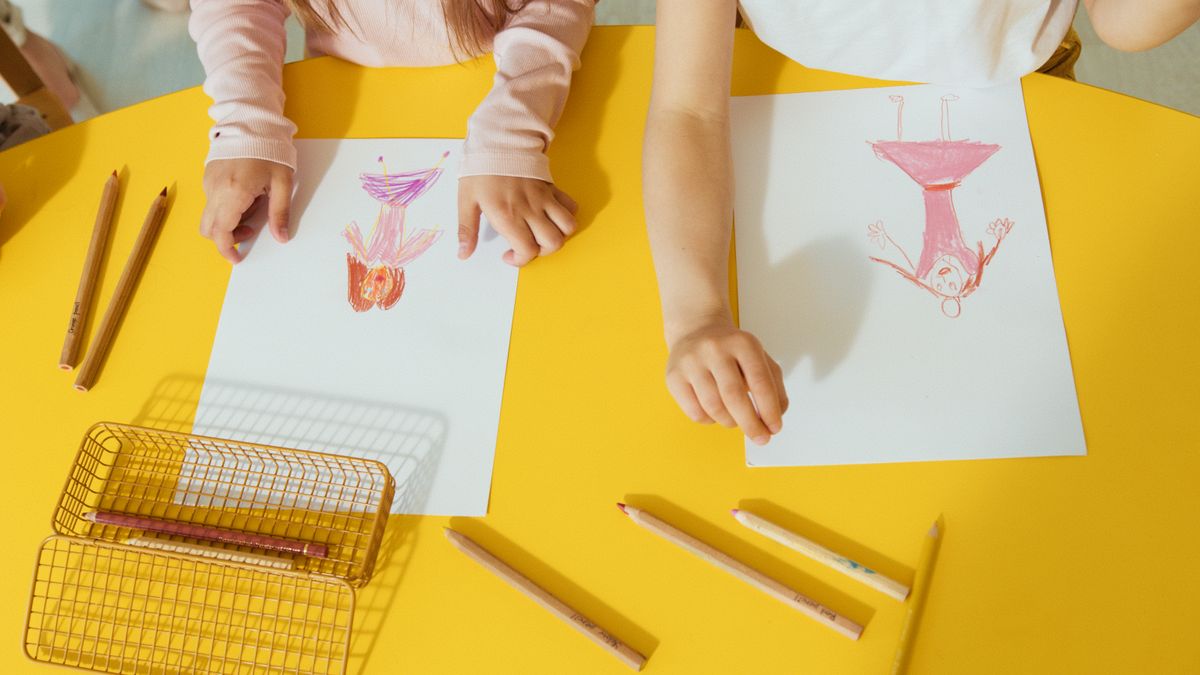
A child's drawing can be a story, a pattern, a movement across paper, or an idea for something they want to make. When a sketch becomes a plan, it gives that idea a place to wait. A child can return to it, explain it, or change it before gathering materials. This does not require realistic drawing or neat labels. A few circles and lines may communicate the essential idea perfectly well to the person who made them. Adults can support this use of drawing by taking the explanation seriously and offering practical help. The drawing should belong to the child's project, rather than becoming another product that must satisfy an adult's standard.
Start from something the child wants to do
A plan is useful when there is an intention behind it. Perhaps the child wants to build a shelter for a toy, arrange a pretend shop, or create a route through a block town. Ask whether they would like to sketch the idea before starting. Accept a no. Some children think through making and may draw afterward. The sequence can move between sketching, building, and revising rather than following a single official order.
Keep the first project small. Planning an entire imaginary city may be exciting, but one bridge or one shop counter offers a clearer connection between a mark and an action. Provide paper large enough for comfortable movement and drawing tools suitable for the child's age. A firm surface matters more than special equipment. Place materials where the child can return to the drawing without constantly asking an adult to retrieve it.
Ask what the marks mean
Let the child explain before you interpret. A large circle may be a door viewed from above, a person, or the place where something important will happen. Say, "Tell me about this part" rather than guessing that it is a sun. Point gently without drawing over the work. If the child has no explanation yet, leave room for the marks to remain exploratory. Not every drawing needs to represent an object.
Write labels only with permission. Ask where the words should go and record the child's own wording. You can add a date or title if they want to remember the plan later. Avoid improving the language until it no longer sounds like the child. The adult contribution should make the idea easier to revisit, not replace its owner. A dictated sentence is useful documentation even when the picture looks very different from an adult's expectation.
Connect the plan with available materials
Look together at what can be used safely. Cardboard, larger blocks, paper, and suitable reusable containers may offer enough possibilities. Adults should check materials for sharp edges, choking hazards, unsuitable coatings, and other risks. Let the child compare the plan with the actual pieces. The drawing may show a huge roof while the available card is small. That difference creates a real design decision.
Ask what could change. The child might reduce the structure, join two pieces with adult help, or choose a different roof. Avoid treating the original drawing as a promise that must now be fulfilled exactly. Plans are working tools. An idea that changes in response to materials has not failed. Explain any limit plainly, such as keeping the doorway clear or leaving tools to an adult, and help the child find an alternative within that limit.
Make sequence visible
Once the project begins, ask which part needs to happen first. A toy shop may need a counter before its goods can be arranged. A cardboard house may need its base joined before decorations make sense. The child can circle the starting point or add a small number if that helps. Keep the sequence short enough to remember and flexible enough to change when a problem appears.
For a child who likes moving pieces, draw steps on separate cards and arrange them in order. For another child, a single picture is sufficient. Avoid producing an elaborate planning sheet with boxes for every possible decision. The tool becomes cumbersome when filling it out takes more effort than the project itself. You are helping the child see a next action, not teaching them to complete adult paperwork.
Use the drawing during a pause
Interruptions are part of family life. A project may need to stop for a meal, an outing, or another person's use of the table. Before clearing it away, look at the sketch and mark what has been completed. Ask what the child wants to try next. A small note such as "make a door that opens" can preserve the intention better than a photograph of materials without explanation.
Store the plan with the unfinished parts where possible. Use a shallow tray or labeled folder if space is limited. Be honest about what can remain assembled. Do not promise to save a large structure indefinitely when the room is shared. Give the child a choice about one part worth keeping. A plan can support continuity even when the whole object cannot stay in place between sessions.
Respond to changes with curiosity
When the finished object differs from the sketch, ask about the decisions that changed it. "Your drawing had two rooms and this has one large room. What happened?" invites an explanation without implying a mistake. The child may have discovered a better arrangement or simply changed interests. Listen for the practical reasoning, but do not require a sophisticated account. "I liked this way" can be a sufficient reason in a creative project.
If the child is disappointed because the object does not match the image in their mind, acknowledge the gap. Offer help with one specific problem rather than taking over the entire construction. A hinge, a wider base, or a different fastening may make a useful difference. Sometimes a second attempt is welcome; sometimes the child is finished. Persisting with a project should remain a choice within reasonable household limits.
Share the plan without staging a performance
A child may enjoy explaining the sketch and object to another person. Ask first, and let them choose what to show. An adult can introduce the project briefly without turning it into a demonstration of ability. Avoid comparing drawings between children or asking an audience to judge which result is best. The useful conversation concerns the maker's intentions, choices, and discoveries.
If you take a photograph, include the plan beside the object so the connection remains visible. Keep images private unless there is a clear reason and appropriate permission to share them. The project does not need an online audience to matter. A family member who asks a sincere question can provide enough recognition. Respect a child's decision to discard a plan or keep it out of view.
Build a habit of returning to ideas
Save a small number of plans the child chooses. Look back occasionally and ask whether any idea still interests them. An old sketch can inspire a new version using different materials or a changed purpose. Avoid arranging the collection as a ranking from poor work to good work. Earlier marks may have served their original intention very well, even if later drawings look more detailed.
The practical habit is simple: an idea can be placed on paper, discussed, tested, and revised. Drawing becomes one possible way to manage a project alongside speaking, moving objects, and making models. A child does not have to become an enthusiastic artist for this to be useful. They only need to discover that their own marks can help them remember what they want to do and decide how to begin.