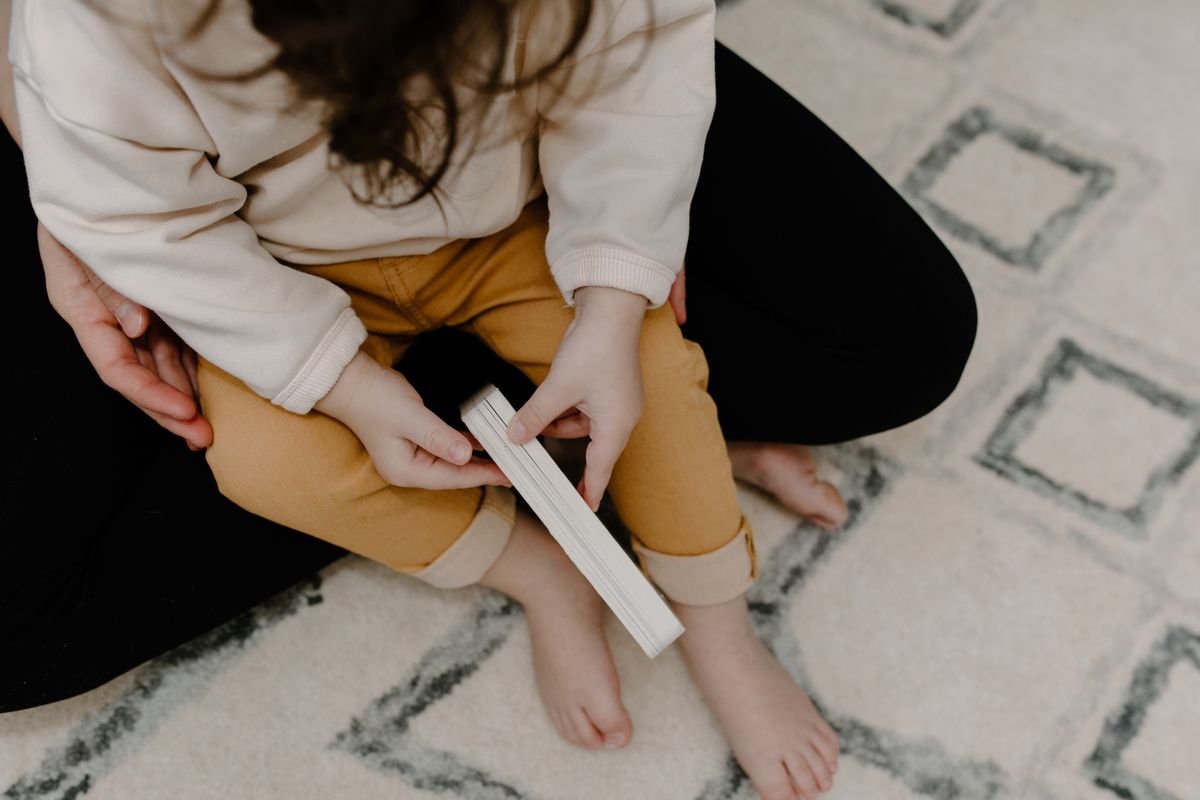
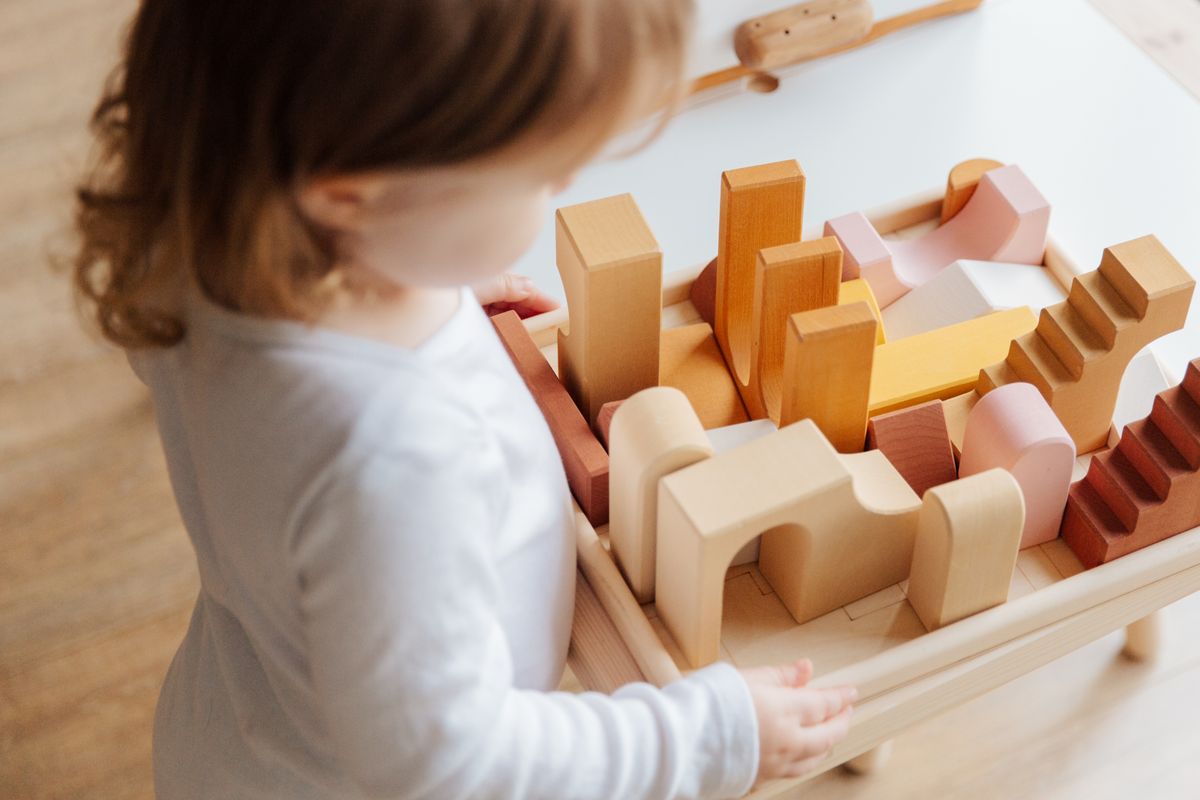
A few blocks balanced beside a chair can become a railway station, a home for a toy animal, or simply an interesting tower. The adult temptation is to improve the structure immediately: make the base wider, find the matching piece, show how an arch works. Yet a block corner becomes more useful when children have room to make those discoveries themselves. The goal is a place where ideas can be tried, taken apart, and tried again. You can create that place without a large playroom, an expensive construction set, or a lesson plan. What matters is that the materials are manageable and a child's decisions have visible consequences.
Start with the floor, not the shopping list
Choose a firm, level surface away from doorways and household traffic. A thick, uneven rug may be comfortable but frustrating for a first tower. A low table can work for a child who prefers standing; a clear patch of floor gives larger buildings room to spread. Keep the area within normal adult supervision, especially when younger siblings share the home. Select blocks appropriate to every child who can reach them, and follow the manufacturer's age guidance. Loose small accessories are unnecessary. A compact collection of larger blocks is often more inviting than a tub containing hundreds of unrelated pieces.
Make the boundary visible without making it rigid. A shallow basket and a small mat say where building usually happens. Leave a safe route around the structure so it does not become something everyone must step over. If space is limited, choose one tray that can sit on a table while the child works. Clear the tray when needed, but photograph an unfinished building with permission so the idea can return later.
Offer a problem that belongs to the builder
Rather than asking for the tallest tower, offer a practical invitation: a toy needs somewhere to sleep, two buildings need a path, or a small vehicle needs a garage. Let the child decide whether the invitation is interesting. Some children will ignore the story and line blocks up by length. That still involves careful observation and purposeful choices. Avoid turning each arrangement into a test about colors, shapes, or counting. You can notice those features naturally without requiring an answer after every move.
Suppose a child wants a bridge for a toy bus. Place the bus nearby and wait. If the first opening is too narrow, say, "The bus is touching both sides." That describes the problem without taking ownership of it. The child may widen the supports, change the bus, or decide that the structure is a tunnel for walking figures instead. Each response reveals a different way of thinking.
Give useful language at the right moment
Words such as beside, underneath, across, balanced, wider, and equal become meaningful when they name something the child is doing. Use one or two words in a clear sentence, then return attention to the play. "You put a long block across the gap" gives more information than repeated praise. "That base moved when you added another piece" connects an action to its result. Neither comment requires the child to perform for the adult.
Questions work best when you really want to hear the answer. "Where does this road go?" leaves room for a story. "What color is that?" may feel like a quiz if the child already knows you know. Silence is useful too. A child concentrating on a delicate placement may need fewer words, not more encouragement. Sit nearby and become available when help is requested rather than narrating every movement.
Treat collapse as information
Falling blocks can be surprising, disappointing, or funny. Respond first to the child's reaction. If the builder is upset, acknowledge the lost work before introducing a solution. "You worked on that roof, and it fell" is enough to begin. Do not insist that the child immediately rebuild or call the failure a wonderful learning opportunity. A pause, a drink, or a different activity can be the sensible next step.
When interest returns, examine one change at a time. Try a wider base, fewer blocks above the gap, or a different orientation. Compare what happens rather than declaring a universal rule after one attempt. Different materials behave differently. Smooth wooden blocks, foam pieces, and interlocking bricks do not pose identical problems. Children can discover this through repeated play without needing a formal explanation of engineering.
Make shared building possible
Two children do not automatically want the same project. One may want a town while another wants to knock down a tower. Begin with enough room for separate work and a clear agreement that a builder decides when their structure comes down. Destruction can be part of play when everyone involved agrees and the area is safe. It should not be an unavoidable cost of having a sibling nearby.
If children choose a joint project, help them divide decisions concretely. One can plan a station while another makes the road. Keep a small supply of commonly wanted pieces available to both. When conflict begins, describe the competing plans: "You both want that long piece for different roofs." Invite alternatives before assigning turns. If the negotiation becomes exhausting, separate projects are a reasonable solution, not a social failure.
Let drawings extend the idea
Place plain paper and suitable drawing materials nearby for children who want to record a design. Some will draw before building; others will sketch a finished town. Neither approach is more advanced or correct. Ask whether the child wants you to write a label or a dictated sentence. Record their words accurately rather than rewriting the story into an adult description. The drawing can be a map, an instruction for tomorrow, or just another part of the game.
Do not require a worksheet after every session. Documentation is valuable when it helps a child remember, communicate, or revisit an idea. A simple photograph may be better than a complicated portfolio. Let the child choose which work to save. Over several weeks, a few chosen images can reveal changing interests: enclosures become roads, roads become networks, or towers acquire careful internal rooms.
A first session can stay very small
For the first invitation, put out six or eight larger pieces and one suitable toy. Sit beside the space and arrange two pieces yourself, then pause. If the child joins, follow their direction. If not, leave the materials available and return to an ordinary activity. An inviting corner does not have to produce immediate engagement. Notice whether the pieces are easy to grasp and whether the surface supports the kind of structure the child attempts. Add a few more blocks only when the current supply limits an idea. This keeps the collection connected with actual play rather than an adult's prediction of what might be educational. The same small supply can be used on another day with a cloth, a drawing, or a different story. Familiarity gives children a chance to return with a new plan.
Finish without erasing the child's ownership
Give a clear warning before the area needs to be cleared. Offer a realistic choice about the ending: save one part temporarily or photograph it before dismantling. Sorting blocks by a feature the child can see makes cleanup easier. A picture of long blocks on one basket is more useful than an elaborate labeling system the child cannot follow. Put storage at a reachable height and avoid overfilling it.
After a week, review the space rather than evaluating the child. Are pieces difficult to find? Does the structure get interrupted by passing feet? Is the basket too heavy? Adjust those practical obstacles first. A successful block corner is not measured by how impressive the buildings look in a photograph. It is measured by whether the child can begin, make choices, stay with an idea for a while, and return when another possibility occurs.