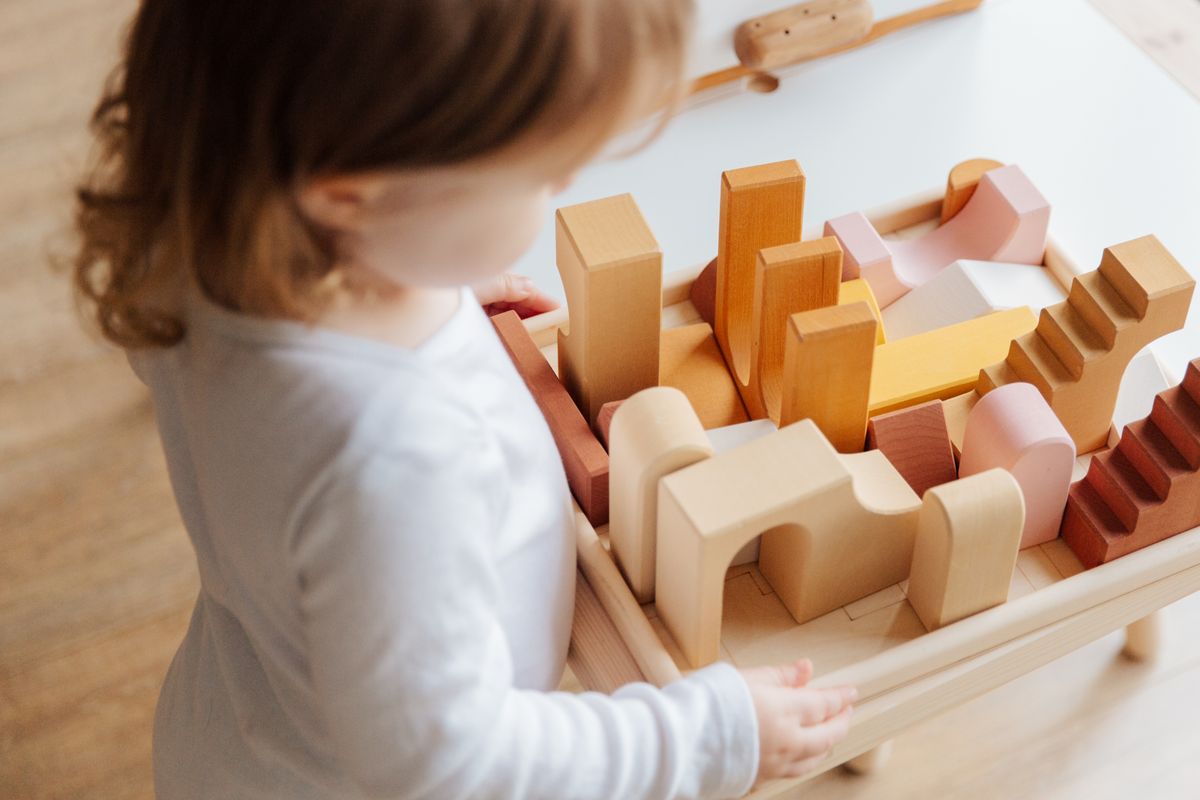
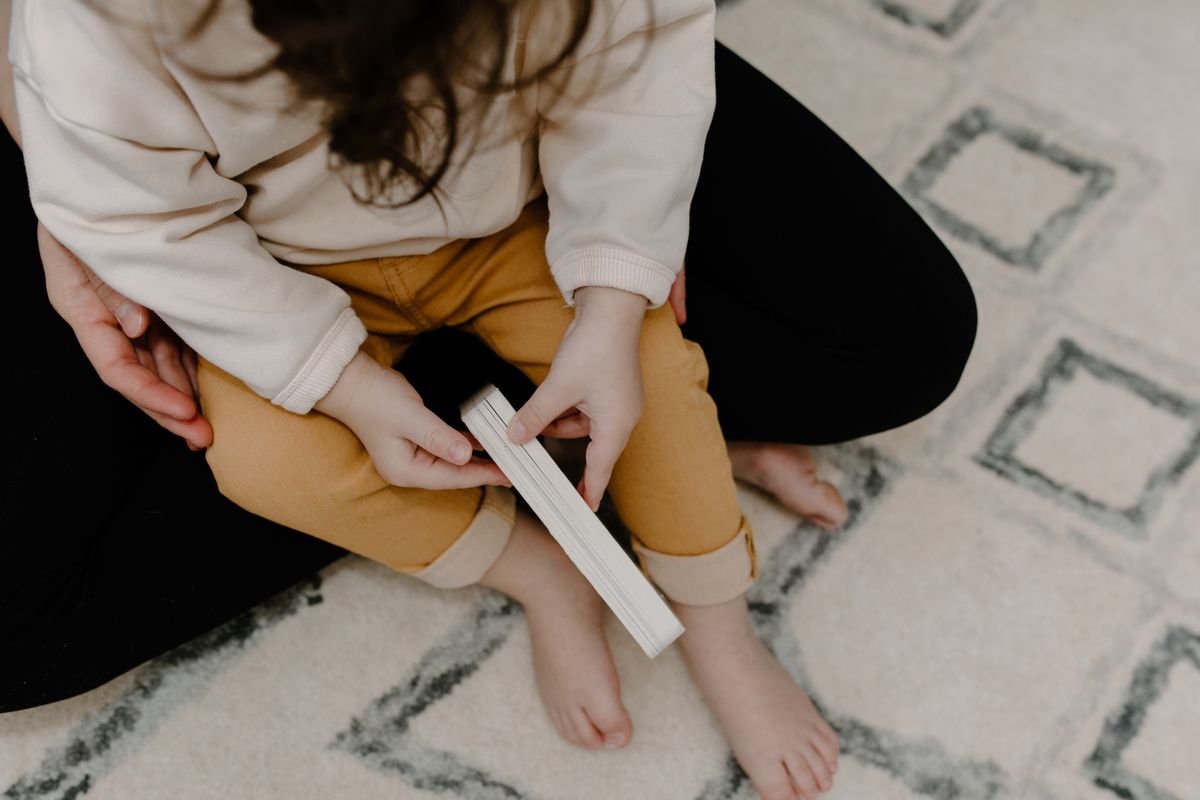
A story basket is a small collection of objects that can be used while telling a story. It might contain a toy animal, a folded cloth, and a cardboard box beside a familiar book. Its value is not in reproducing every illustration. The objects give a child something to move, connect, and talk about. A quiet child may show an idea before finding the words for it. Another child may abandon the printed story and invent a new one. Both responses can belong in the same relaxed reading session. Start with a book your child already enjoys and materials that are safe for their age and play habits.
Choose familiarity before novelty
Pick a short story with a setting or repeated event that your child recognizes. A trip to a park, a missing object, or a visitor arriving at a door gives the objects a clear role. Read the book normally at least once before adding anything. Notice what the child remembers or returns to: perhaps a tiny picture in a corner matters more than the main character. That interest is a better starting point than a carefully purchased themed set.
Choose only three or four objects. A cloth can become a blanket, river, or picnic mat. A box can be a house or a bus. Avoid small loose parts when a child may mouth objects, and keep cords, fragile items, batteries, and unsafe household materials out of the basket. More pieces do not necessarily produce a richer story. Too many can make finding the next object more distracting than listening.
Introduce the objects slowly
Set the book where you can both see it and leave the basket beside the child. You can say, "These might help us tell the story." There is no need to announce a special educational activity. Begin reading and let the child investigate. If an object appears at an unexpected moment, follow the child's explanation rather than correcting the sequence immediately. A toy dog may be a visitor who was never in the original book.
For a child who prefers clear structure, demonstrate a single action. Put the animal inside the box when the character enters a house, then hand control back. The demonstration should open a possibility, not establish a performance the child has to copy. Some children will want to hold one object throughout the whole reading. That can be enough. Participation does not have to look busy to be meaningful.
Keep the conversation open
Comment on what you can observe: "The bear is waiting outside" or "You covered the little house." Pause long enough for a response, which may be a gesture rather than a sentence. An open question such as "What could happen next?" works when the child is interested in inventing. When the child is absorbed in the familiar text, questions can interrupt the pleasure of hearing it. Read the room as well as the page.
Avoid asking the child to identify every object or prove that they understood the plot. You can model a useful word within the action. "The blanket is sheltering the animals" gives meaning through context. If a child uses an unexpected word, respond to the idea before adjusting language. Repeating their sentence in a natural, expanded form usually keeps the conversation moving better than stopping for a correction.
Make space for different versions
The printed story offers a shared starting point, but a basket makes changes easy to try. A character can take another route, find a companion, or solve the problem differently. You might wonder aloud what would happen if the box had two doors. Let the child accept or reject that possibility. Invention becomes more satisfying when the child can influence the direction rather than merely fill gaps in an adult's plot.
Keep difficult themes proportionate to the child's comfort. A story about getting lost does not need to become a frightening lesson. If the child repeatedly changes a tense ending, you can accept the new version and read a different book afterward. Story play is not a way to diagnose emotions or uncover hidden experiences. When a child shares a concern, listen plainly and respond to that concern outside any pressure to continue the activity.
Welcome the home language
Use the language or languages that make conversation comfortable in your household. A child can hear the printed text in one language and explain the toy's actions in another. You do not have to translate every sentence or turn the basket into a vocabulary drill. Familiar voices, shared jokes, and clear explanations can keep the story accessible while the child experiments with words.
If another caregiver joins, show them the child's current version rather than insisting on a single official script. They may bring another name for an object or a family story connected to it. Write a few of the child's exact phrases on a card if they want to remember them. Keep the card with the basket, but allow the story to change again next time. A remembered version is a resource, not a rule.
Adapt for a group or a reluctant participant
With two children, offer separate objects and enough personal space to use them. They may take turns narrating, but they do not need identical speaking time in every session. One child might manage the setting while another voices a character. Explain that an object can be passed when its holder agrees, and offer an alternative if both want the same piece. Shared attention is easier when handling rules are simple.
A child who does not want to speak can point, move an object, choose a page, or simply listen. Avoid public prompts such as "Tell everyone what you made." You can ask privately whether they want you to explain it. If even the objects feel distracting, put the basket aside and read together. The tool should serve the relationship with the story; the child does not owe the tool a particular response.
Try a beginning with no performance expected
At the next reading, place one familiar character beside the closed book and ask whether the child wants to hold it. Read as usual. When the character appears, pause briefly and see what happens. The child may move the toy, point to the picture, or do nothing at all. Continue without turning the pause into a demand. On a later reading, offer the cloth or box and let the child decide where it belongs. This gradual introduction makes it easier to discover whether the objects support attention or compete with it. If the basket keeps drawing everyone away from the book, use it for a separate retelling afterward. Reading and acting do not have to happen simultaneously to enrich the same story.
Keep a small collection alive
Leave the basket accessible for a few days if it remains interesting. Children often retell parts of a story on their own when no adult is requesting a demonstration. Check the pieces for damage and remove anything that has become unsafe. Change one object when interest fades rather than replacing everything. A paper ticket can turn a house story into a journey, while the familiar character keeps it connected to earlier play.
End by inviting the child to choose what stays in the basket. Return unrelated toys to their normal places and put the book where it can be found again. You can keep a note of a particularly good conversation, but resist measuring how many new words appeared. The useful question is simpler: did the objects make it easier to enjoy, discuss, or reshape a story together? If they did, the basket has done its job.