Many parents have a misconception about art enlightenment, equating drawing with art and considering good drawing as the only criterion. So, the child started copying simple strokes, sketching, and drawing according to examples very early on. In the end, the result is often that the painting becomes more and more orderly, while imagination and creativity are gradually restricted. In fact, true children's artistic enlightenment does not rely on training classes, talents, or expensive teaching aids. It is hidden in daily observation, free creation, and gentle companionship. Ordinary families can also settle down at home and persist for a long time.
Many parents are prone to biases in three cognitive aspects. Art enlightenment does not mean learning painting skills. Drawing is only a small part of art, and light and shadow, color, texture, composition, aesthetics, imagination, and emotional expression are the core of artistic enlightenment. What we cultivate is not a painter, but a child who can discover beauty, understand feelings, and dare to express themselves.
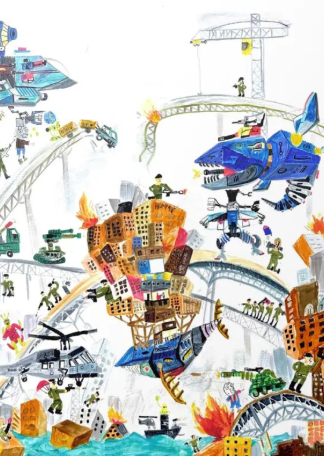
Children's drawings do not require standard answers. In the eyes of adults, the sun is round and yellow, while trees are green and grow on the ground; In the eyes of children, the sun can be blue, clouds can have expressions, and trees can dance. There is no right or wrong here, only imagination. Forcefully correcting, modifying, and negating is one of the fastest ways to destroy a child's artistic talent.
Art enlightenment should also look at the process, not just the finished product. Don't worry about whether the image is dirty or not, whether the lines are crooked or not, and whether the content is messy or not. The process of children observing carefully, creating boldly, and expressing themselves freely is far more valuable than a perfect work.
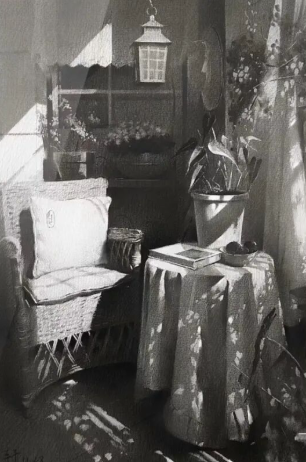
Low cost art enlightenment that can be done at home can start with sensory aesthetics. The foundation of art is observation. Usually taking children out or living at home can deliberately guide them to see the world. Look at the differences in the sky between early morning, evening, and cloudy days, observe the patterns of leaves, petals, rough bark, the spots of sunlight shining on the table, the folds of curtains, the shadows on the ground, as well as the cut surfaces of fruits, the patterns of stones, and the patterns of clothes. There is no need to talk about profound art theories. Let children see, touch, and feel more, and their aesthetics will naturally be nurtured.
Diversified and free creativity is equally important. Many children become increasingly unable to draw as they learn, often due to their limited thinking by templates. The core of family art creation is free creation. All materials around can be utilized. Graffiti, finger painting, watercolor coloring, and free line creation are all acceptable; Leaves, petals, and small stones can be used for collages and rubbings; Paper boxes, bottle caps, newspapers, and cotton ropes can also be turned into handmade materials. Allow scribbling, strange color combinations, and wild imagination. There is no template for creation, children's ideas are the best templates.
Artistic aesthetic cultivation requires more reading, more feeling, and less memorization. You can take your child to watch high-quality illustrations, art picture books, and children's art paintings in daily life. The focus is on feeling, not memorizing knowledge points. There is no need to force children to remember the artist's name, the year of the artwork, and the art genre. Just ask simple questions to guide them, such as which color in the painting they like the most, whether they feel happy or quiet after seeing it, and if it were you, how would you paint it. Under long-term influence, children's color sense, visual sense, and aesthetic sense will quietly widen the gap.
Only when art truly integrates into life can it have more vitality. Life is the biggest art classroom. When eating, you can observe the color of the food and the beauty of the presentation; When dressing, one can recognize color matching and simple pattern styles; When listening to music, you can sway along with the music and express emotions with your body; When doing household chores, you can feel the beauty of neat and tidy order. Integrating art into daily life will gradually engrave children's aesthetics into their bones.
Praising children's paintings also requires more specificity and direction. Many parents habitually say "it's really well drawn," "it looks too similar," or "it's great." This kind of praise can be hollow and may even make children fixate on drawing like it. A more effective way is to praise the process, creativity, and ideas, without praising the results or appearance. For example, you can tell your child that I noticed that you used a lot of gentle colors today, which is very thoughtful; Your lines are so free, I really like your creative style; Can you tell Mom about your paintings? I'm curious about your little world; You are particularly focused on drawing, and this seriousness is more precious than your work.
Children of different age groups have different emphasis on artistic enlightenment. Children aged two to three are in the stage of sensory exploration, mainly focusing on touch, graffiti, and color perception, creating freely without any requirements. Children aged four to six entering the stage of imaginative expression can be encouraged to freely draw and create collages, allowing them to tell stories about their own paintings and protect their imagination. Children over the age of six entering the observation and improvement period can simply try sketching, observe details, and have appropriate exposure to artistic styles, while still retaining the freedom of creative space.
Parents should also avoid some common misconceptions. Don't prevent children from scribbling and drawing, only pursue clean and neat images; Do not limit children's creativity with simple stroke templates and copied images; Do not casually negate children's works, correct their color matching and styling; Don't compare the quality of works, only focus on the results and not the process; Don't pursue a finished product in one class, making art learning too utilitarian. True artistic enlightenment is never about forcing children to paint like, but about allowing them to slowly establish their own aesthetic world through observation, perception, and expression.