Language development includes three important areas: clear and accurate pronunciation, a growing vocabulary, and the ability to express ideas verbally. Storytelling plays an important role in helping children develop these language skills. So how can parents use stories to support a child’s language development?
When adults tell stories to children, they should first make a habit of speaking clearly and accurately. Standard spoken language should be used instead of dialects, so that children have a good model to follow as they learn pronunciation. The way adults speak provides children with an example of how words and sounds should be pronounced.
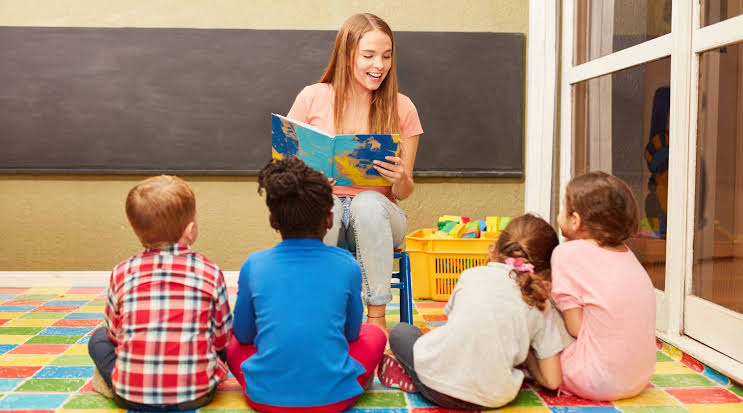
Storytelling should also involve both listening and visual learning. Adults can use real objects, demonstrations of mouth movements, facial expressions, and gestures to give children a clear and concrete example of how sounds are produced. Children should then be given repeated opportunities to listen, distinguish between sounds, and experience them for themselves.
After finishing a story, some of its vivid, interesting, or playful scenes can be turned into simple games based on the child’s age and abilities. This allows children to practice and learn language naturally while taking part in an enjoyable activity.
Storytelling can also be used to expand children’s vocabulary. While telling a story, adults can use facial expressions and gestures to demonstrate common and simple words, helping children understand their meanings more easily.
The words and concepts used in a story should be simple, familiar, and accurate. Whenever possible, children can be encouraged to use their existing knowledge and experiences to explain the meanings of unfamiliar words themselves.
Parents can also ask children to replace some commonly used words in the story with synonyms or similar words. They can provide appropriate hints when necessary and respond to the child’s answer by confirming whether it is appropriate.
Another useful approach is to pause during the story and encourage children to fill in some key words. For example, a parent might say, “A _____ tiger suddenly appeared from the woods, and the three little rabbits ran _____,” allowing the child to supply words such as “fierce” and “quickly.”
Storytelling is also an effective way to develop children’s ability to express themselves. When telling a story, parents should use a warm and natural tone and describe the events in a vivid and organized way. They should avoid unclear expressions or disorganized descriptions that could make it difficult for children to understand the story correctly.
The story itself provides a meaningful context in which children can imitate and practice language. Parents can encourage children to imitate some of the conversations, sounds, or other forms of expression found in the story. This gives children a natural opportunity to practice speaking and learn how language is used in different situations.
After the story is finished, parents can ask children to retell it, either by describing some of the events or explaining the general idea of the story. This helps children learn to summarize information while also encouraging their creativity.
Parents can also stop telling the story at an important moment and encourage children to imagine what might happen next. Children can then create their own continuation of the story based on their imagination. This gives them an opportunity to organize their thoughts and express their ideas in their own words.
Finally, parents can use children’s existing knowledge and experiences to help them express the events of a story through pictures, puzzles, drawings, or pasted images. Old books and magazines can be especially useful for this activity. Children can choose pictures of people, animals, scenery, and other objects, arrange them into a scene with a story, and then create and tell their own short story based on the pictures.